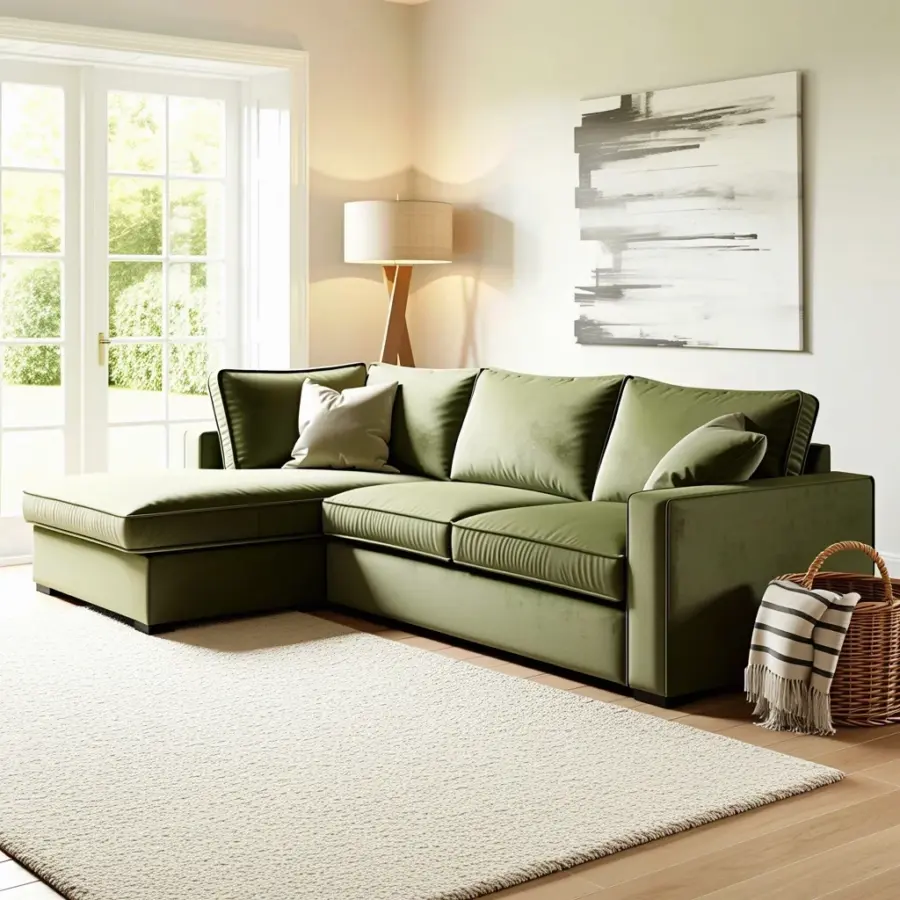
Three months ago I opened an AI interior design app with a handful of photos of my sad, beige rental living room and typed in a prompt that had taken me weeks to refine. The first image it spat out was so specific, so perfectly matched to my actual floor plan, that I nearly dropped my coffee. The second image was the room itself, styled exactly the way the AI had suggested, and the difference honestly made me laugh out loud. This is the reality of AI interior design in 2025, it is not a futuristic fantasy, it is a working tool that changes how you look at your own furniture.
I have spent the last few months testing sofa styling prompts, swapping out throw pillows, moving lamps, and rearranging coffee tables based on what the software recommended. Some suggestions were absolute duds, but a surprising number of them worked. And I have gathered the best of those themes here, a sort of curated roundup of AI sofa styling ideas that translate into real rooms without turning your space into a showroom diorama.
Start with the “Blank Canvas” Prompt That Actually Works
Ok so, the first rule of AI sofa styling is that you cannot ask for a generic “cozy living room” and expect anything useful. You have to give the machine something to react to. My magic prompt involves three key pieces of information: the exact sofa dimensions, the wall color, and the foot traffic flow. You would be surprised how many broken suggestions happen because the AI thinks you have six feet of empty space on either side of the couch.
Write your prompt like you are giving instructions to a stubborn but brilliant intern who has never seen your house. Mention the light source, the position of the TV, and whether you have a cat that will absolutely destroy anything velvet. Then ask for three different layout options in one generation. The AI will often return a mix of “safe but chic” and “wildly impractical,” and that mix is where the gold is hidden.
The “Loose vs. Literal” Case Study in My Own Living Room
Let me show you the before and after that convinced me. The “before” was a grey three-seater shoved against the longest wall, flanked by two identical black floor lamps that I bought in a panic during a 2019 sale. The AI prompt, refined over a week, simply read: “relaxed Mediterranean coastal cabin, avoid nautical clichés, use warm taupe with a nubby wool texture, prioritize low-maintenance fabrics.” The first generated image showed the same sofa, but floating in the middle of the room with a narrow console table behind it. I have never in my life considered floating a sofa that was not a sectional. It took me a week to try it. Now I am not gonna lie, it was the single best change I made.
And the “literal” part is what happened next. The AI suggested a single long oak bench instead of a traditional coffee table. I ignored it at first, then found a beat-up one at a flea market for forty dollars. That bench, paired with the floating sofa, gave the room a breathing quality that no amount of new throw pillows could have achieved. The room follows the AI’s mood board almost exactly, minus the fake olive tree which, honestly, I already had and the AI just made me feel better about it.
Three AI Sofa Styling Tricks You Can Apply in Ten Minutes
Not every idea requires moving heavy furniture. Some of the best suggestions are just about tweaking what is already there, and here are the ones that keep popping up in every successful AI generation I have tested:
- The “offset arc” lighting rule: put a floor lamp behind the sofa’s short arm, not beside it, to create a soft halo effect that makes the seating area feel like a destination.
- One oversized cushion leans, never two matching ones. Asymmetry is your friend because it instantly kills that “catalog display” vibe.
- Pull your rug out from under the sofa’s front legs, just a little, leaving them half-on and half-off. It sounds wrong, but it visually expands the floor space more than you would believe.
When the AI Suggests Something Odd, Trust the Eye Roll
Here is the thing, my latest prompt generated a suggestion to paint the ceiling in a dark burnt sienna. I laughed, rolled my eyes, and immediately screenshotted it to a friend with a series of crying-laughing emojis. But the idea stayed lodged in my brain. A week later I bought a tester pot, painted a two-foot square patch near the window, and stared at it for three days. I did not repaint the whole ceiling, but I did buy washed linen curtains in that exact tone, and the whole sofa setup suddenly looked intentional.
The lesson is that AI is not always right, but it is rarely boring. When you see something that feels off, ask yourself if it is the scale that is wrong or just the material. The AI was thinking terracotta plaster walls, I was looking at white drywall. Same color story, completely different visual weight. Learning to translate the AI’s wilder ideas into small, real-world gestures gives you a custom look for about the price of a decent bottle of wine.
Do not be afraid to edit the prompt until the image makes you feel something other than indifference. A vague “nice” is a failure. If the output does not make you slightly uncomfortable, you have not pushed the text far enough.
Budgeting for the After, Not the Before
The biggest trap people fall into with AI interior design is thinking the output is a shopping list. It is not. The “after” photo that the AI creates is often aspirational, featuring furniture that costs more than my first car. But you do not need the exact pieces, you need the spatial relationships. The proportions, the negative space, the way a low slung chair changes the visual weight of a high-backed sofa. That is the actual information worth saving for later.
I have started using the generated images as a puzzle. What part of this can I duplicate with a flea market find? What can I do with a can of paint? Which suggestion just means “move the lamp three feet to the left and lower the art”? When you break it down that way, the AI becomes a cheap design consultant instead of an expensive furniture catalog. And if you get stuck, feeding your budget constraint back into the prompt, like “budget-friendly IKEA hack” or “all secondhand materials,” often produces surprisingly practical alternatives.
The best part of this whole experiment is the permission it gives you to try things. Honestly, I was stuck in a decorating rut, paralyzed by the fear of making the room look worse. Letting a machine make the first bold move is weirdly liberating. You stop second-guessing yourself because the risk feels assigned to the algorithm, even though you are the one with the credit card.
Grab a photo of your room, open any AI interior design tool you prefer, and ask it for one specific change, not a whole makeover. Move your sofa if you can, or just swap out a single lamp shade. Then save the results for later, because once you see your own space through a machine’s eyes, you will never look at that blank wall the same way again.
Leave a Comment